Research
We build AI methods that meet the standards of evidence required in medicine, combining mathematical and statistical analysis with algorithms designed for clinical workflows.
Full publication listLearning & robustness
Understanding generalization and reliability of large-scale models from first principles.
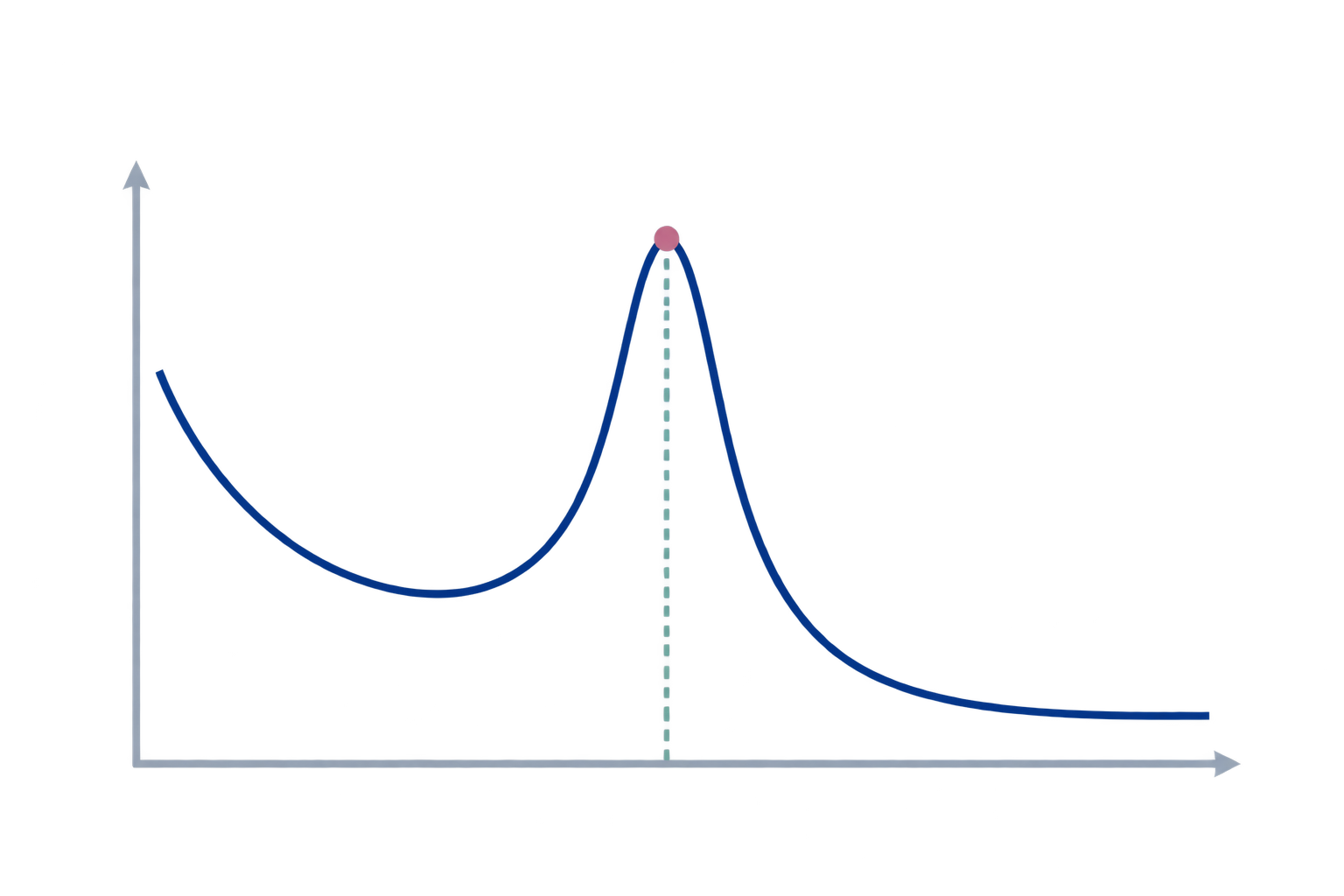
Number of parameters and generalization
Our work studies how highly overparameterized models generalize despite their capacity to fit arbitrary labels. We investigate implicit regularization in dynamical systems and encoder–decoder models, and how the number of parameters affects adversarial robustness. These results also inform pruning and sparsity in neural networks.
Selected publications
Robustness of linear models
We study connections between adversarial training, classical regularization, and distributionally robust optimization. For linear regression, this work establishes links to the square-root Lasso and shows how tuning can be independent of the noise level. We also develop efficient solvers and extend these ideas to kernel methods.
Selected publications
Signals & systems
Building tools for time series, system identification, and learning dynamics.

Neural networks for system identification
We connect neural network architectures with classical system identification to learn dynamical models from data. This work studies how convolutional and recurrent networks represent dynamics and how their training can be made more reliable, including through analyses of optimization smoothness and multiple shooting methods.
Selected publications
Foundation models for physiological signals
We develop foundation models that learn reusable representations of physiological signals, with a particular focus on ECGs. This work examines how model size, data, and pretraining choices affect generalization, and how shared representations across recording settings and devices can support transfer to new clinical tasks.
Selected publications
AI for medicine
Deploying advanced AI models in medical pipelines.
AI in the emergency department
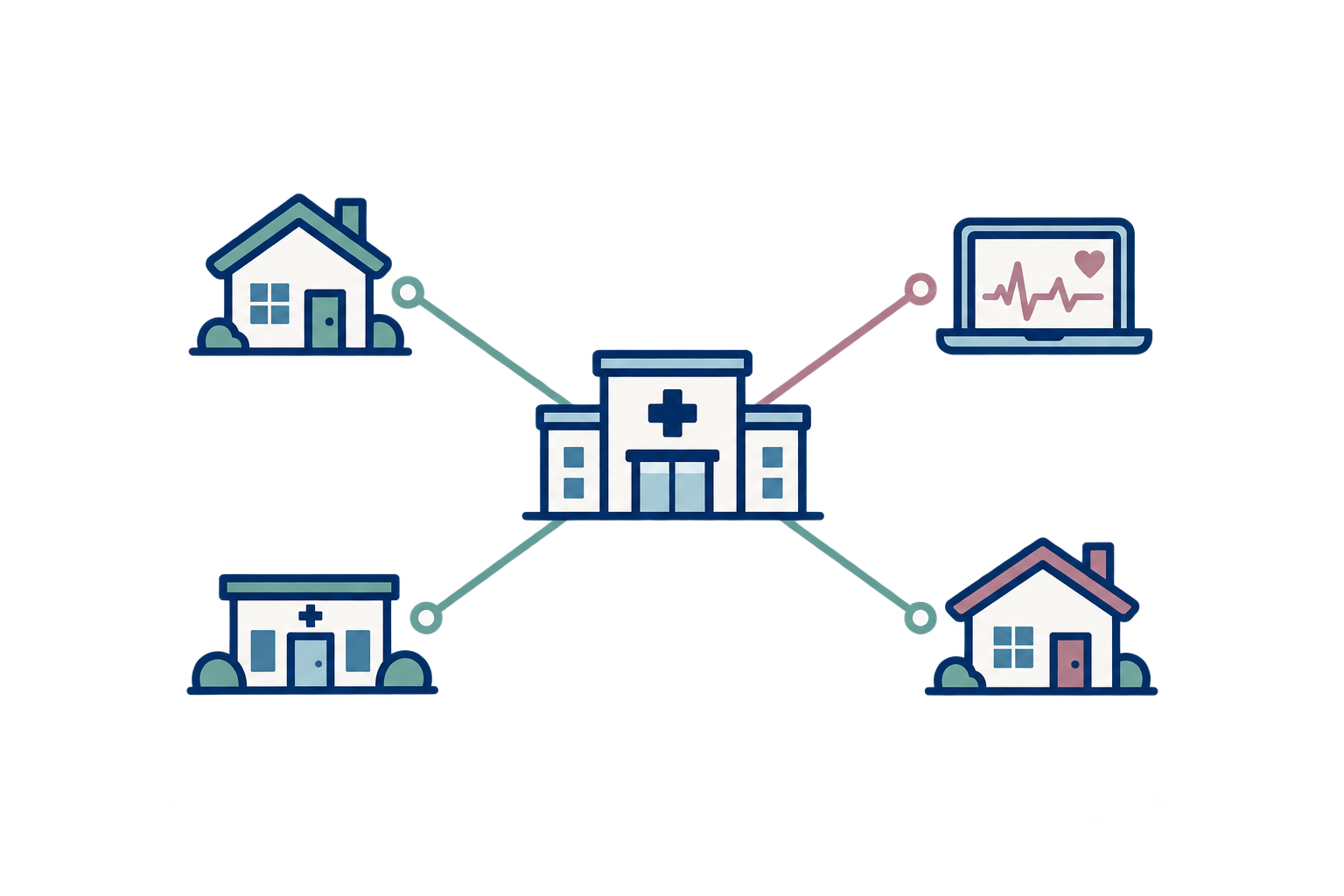
In collaboration with clinicians in Uppsala, we develop AI tools that help identify urgent cardiac conditions from the ECG. Our recent model detects acute coronary occlusions and identifies the affected coronary artery, with the aim of supporting earlier recognition and guiding coronary intervention. Clinical trials are the next step in evaluating its impact on patient outcomes and emergency care resources.
AI in telehealth
Through a long-term collaboration with the Telehealth Network of Minas Gerais, we develop ECG-based AI for routine diagnosis and screening. Our initial model learned from two million labelled exams to identify six abnormalities; this work has since expanded towards comprehensive ECG analysis. We also develop screening methods for conditions such as Chagas disease, bringing diagnostic support to communities where access to blood tests is limited.
Selected publications